
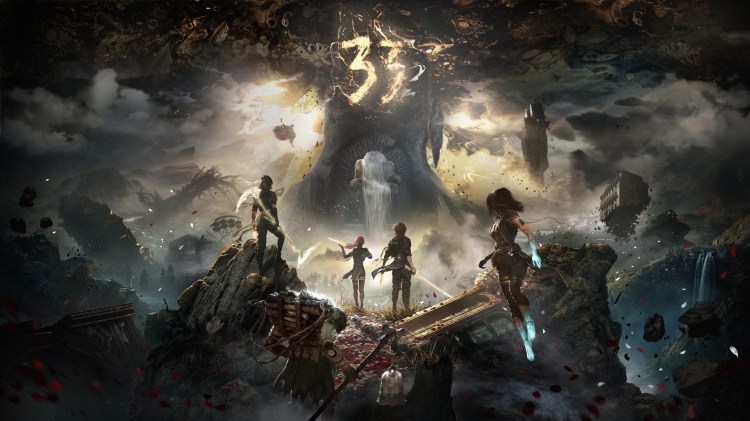
A Masterpiece Painted From Hope, Loss, and Defiance
Clair Obscur: Expedition 33 is a novel experience built around contradiction. It is a story about accepting endings while fighting against them, a world defined by loss that is still filled with beauty, and a traditional turn-based RPG that manages to feel surprisingly nuanced and modern. For a debut project from Sandfall Interactive, that level of confidence is remarkable—not because it avoids the influences of the genre’s greatest titles, but because it understands them well enough to create something distinctly its own.
Role-playing games have always been built around the idea of possibility. They allow players to step into unfamiliar worlds, form bonds with companions who gradually become like family, and experience stories where individual choices can shape the fate of entire civilizations. However, the RPGs that remain memorable long after the credits roll are rarely defined only by their mechanics or the size of their worlds. They succeed because they understand something deeply human: our fear of losing what matters, our desire to find purpose, and our need to make meaning from the time we are given. Sandfall Interactive’s debut does not succeed because it attempts to recreate the classics that came before it. Instead, it succeeds because it understands why those games resonated in the first place. Expedition 33 combines the emotional storytelling of character-driven RPGs, the strategic depth of traditional turn-based combat, and a world built around artistic expression and philosophical questions. These familiar elements are brought together with such a clear creative identity that the game never feels like an imitation. It feels like the work of a studio with a clear and defined message to deliver. That is an incredibly difficult achievement, especially for a first major release.
Expedition 33’s combat is not simply a system designed to provide obstacles between story moments; it reinforces the themes of patience, adaptation, and perseverance that define the journey. Its world is not just a visually impressive fantasy setting; it reflects the harmonious exploration of beauty, mortality, and the temporary nature of existence. Most importantly, its characters are not simply companions who fill party roles—they are the emotional heart that propels the player forward.
Sandfall Interactive understands a fundamental truth about the RPG genre: impact is not determined by size. A game does not need the largest map, the most complicated mechanics, or hundreds of hours of content to leave a lasting impression. What matters is whether every element has a purpose.
With its benevolent moments of tranquility and levity, delectably riveting plot twists that defy the conventions of standard notions, a remarkably exquisite soundtrack that evokes a masterful deliverance of beauty and sorrow, and unparalleled art direction that radiates a quality of idiosyncratic perfection ripped straight from a Renascence painting, Clair Obscur: Expedition 33 ends up being one of the most novel and enthralling experiences to grace any form of entertainment.
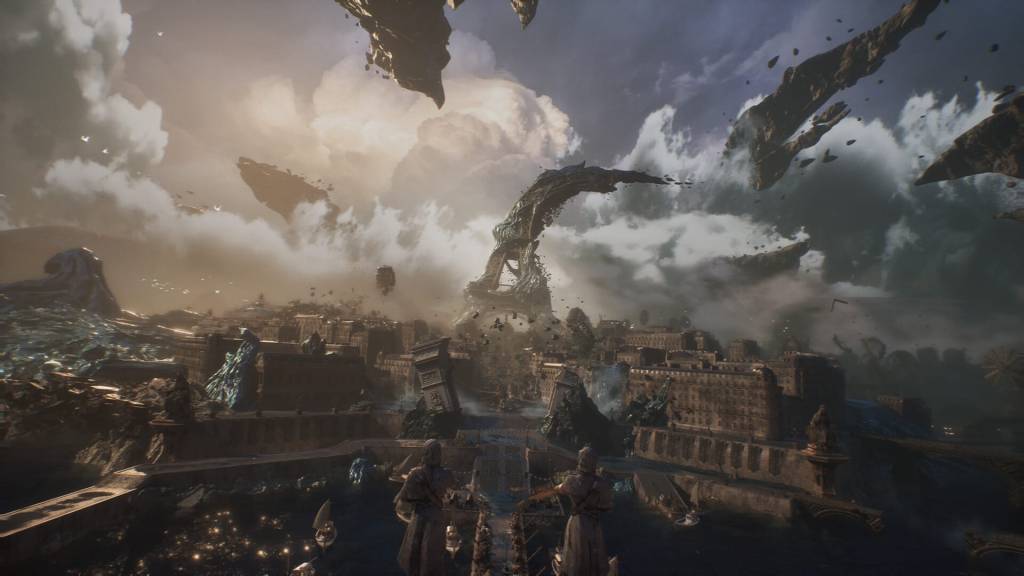
The world of Lumière exists under the shadow of the Paintress, a mysterious figure responsible for the annual event known as the Gommage. Once every year, the Paintress paints a number onto the Monolith, and every person who has reached that age disappears. This cycle has continued for generations, shaping an entire society around the knowledge that death is not an unpredictable possibility—it is a scheduled event.
In most RPG privy with a sense of impending doom, the threat of destruction is something distant. Characters fight against a possibility: an approaching war, an ancient evil awakening, or a disaster that may occur if they fail. In Lumière, the people are already living with the consequences. The end is not something they fear might happen someday. It is something they know is coming. This creates one of Expedition 33’s most interesting ideas: what happens when humanity is forced to live with certainty?
The Gommage is not merely a plot device used to justify the expedition. Sandfall Interactive uses it to explore how people define their lives when their time is limited. The inhabitants of Lumière cannot assume they will have decades to achieve their goals. They cannot endlessly postpone their dreams or relationships. Every decision carries a greater sense of importance because everyone understands that time is something they cannot reclaim.
This idea of impermanence is painted throughout the world of Expedition 33, where an equilibrium that juxtaposes this duality of tragedy and beauty fosters a harrowingly poignant sense of celebration and grief. In every corner of this universe, fleeting moments echo with the weight of loss, yet they simultaneously illuminate the joy of ephemeral connections, creating a rich tapestry of experiences that resonate deeply within the hearts of its inhabitants. The landscapes are imbued with stories of those who came before, their legacies interwoven with the present, reflecting the harsh yet beautiful truth that nothing lasts forever. That balance is what makes the world feel more emotionally complex than a simple story about defeating an enemy; it transforms each encounter into a profound reflection on life itself, urging characters and players alike to cherish every fleeting heartbeat amidst the chaos of existence. The Paintress represents more than a physical threat. She represents humanity’s fear of being powerless against forces beyond its control. The expedition is not only a mission to defeat an antagonist; it is an attempt to reclaim agency in a world where generations of people have been denied control over their own futures. The members of Expedition 33 are not fighting because victory is guaranteed. They are fighting because trying still matters. Their sacrifice encourages understanding and insight, painting a clearer picture of the unknown for those who come after.
Expedition 33’s enthralling narrative is eloquently brilliant, with each facet of its journey being shrouded in a tantalizing mystery that introduce new riveting questions as each subsequent layer is unraveled. It’s been a long time since a narrative has captivated me so completely. What begins as an intriguing mystery slowly blossoms into an emotionally resonant journey, one that continually challenges your expectations while remaining deeply personal. Long after the final scene, its themes of hope, grief, and perseverance continue to linger, making it a story that is as unforgettable as it is beautifully told.
From its guttural opening of melancholic poignancy to its harrowing sequence of decimation that rivals the shell shock nature of war skirmishes, there is no shortage of jaw dropping moments that leave players with an ineffable sense of awe.
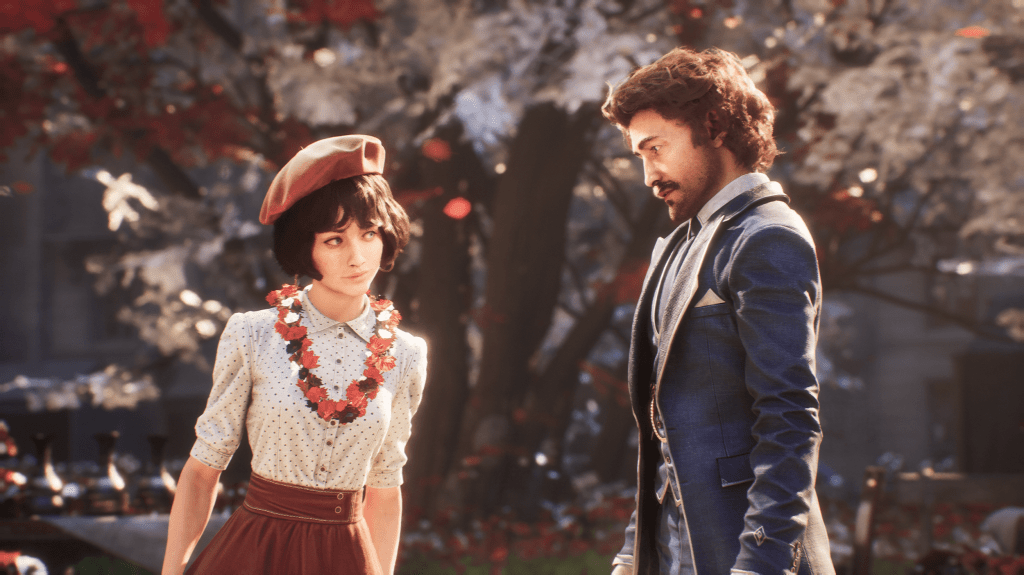
While its profound deliverance of mystery acts as the foundation for its story, it is the members of the expedition who give that story its emotional weight. A compelling concept can create curiosity, but it is the complex characters that provide a nuanced sense of cohesion and player reflection.
The most memorable adventures are seldom remembered only because of their worlds or mechanics. They are remembered because of the people encountered along the way—the conversations shared between major events, the personal struggles revealed over time, and the relationships that develop throughout the adventure. Each character brings their own history, perspective, and personal resonance. Their differences create a group dynamic that feels natural and whimsical.
Gustave serves as one of the emotional foundations of the expedition. He chooses to spend his last year of existence in a Hail Mary attempt to obtain invaluable research and insight to aid future expeditions, despite the fact that failure is an expected outcome. Gustave embodies a remarkable inquisitive spirit displayed through his wholesome excitement for whimsical invention and pioneering creation. He also exudes a rambunctious nature that strikes a resounding balance of determination and whimsy, often showcasing his empathic nature with his foster sister, Maelle.
Maelle offers one of the most personal perspectives within the group. Her journey is not only about discovering the world beyond Lumière, but also about self-identification. What makes her development effective is that it feels gradual. She is not transformed overnight by a single event; instead, her experiences slowly challenge the way she views herself and the world around her. She exudes a profound sense of naivety and wholesome intrigue, but equally displays a hardened sliver of perseverance given her unconventional upbringing and circumstance. Her character represents one of the Expedition 33’s strongest ideas; people are often shaped not by the tragedies that happen to them, but by how they respond afterward.
Lune adds a sense of curiosity and discovery to the expedition. In a world where many characters are focused on survival, duty, or acceptance, her desire to understand the mysteries surrounding their circumstances creates an important contrast. She represents the logical idea that seeking knowledge still matters, even when the answers may be painful. The importance of the mission cannot be understated. Her presence reinforces one of Expedition 33’s central themes: understanding the world is valuable, even when understanding does not provide easy solutions.
Sciel provides balance within the group by bringing warmth and optimism to a story that could easily become consumed by tragedy. Her role highlights an important strength of the writing—it understands that emotional impact does not come from constant sadness. Loss only matters because something meaningful existed before it. The lighter moments of levity and moments of humor and connection are relatively sparse given the dire nature of the sorrowful world they inhabit, but their infrequencies are what makes them so previous, captivating, and memorable.
The strength of Expedition 33’s characters is further enhanced by the quality of its performances. The voice acting does not simply deliver information to the player; it captures the emotional complexity of individuals dealing with extraordinary circumstances. The cast brings subtlety to their roles, allowing quieter moments of hesitation, uncertainty, and reflection to carry as much importance as the larger dramatic scenes.
Ben Starr’s performance as the illusive Verso brings an expert level of complexity to the established repertoire, striking an impeccable chord of uncertainty and intricacy that is intentionally equivocal. Jennifer English’s portrayal of Maelle is transendent, capturing an elegant semblance of naivety and raw emotive turmoil. Both actors bring unparalleled depth and believability to their characters, making their struggles feel authentic and personal rather than simply serving the larger narrative. That quality extends throughout the entire cast and strengthens Expedition 33’s core ideals of verisimilitude; the player becomes invested in the people behind the mission.
By the later stages of the expedition, the stakes are no longer defined only by the goal of reaching the Paintress. They are defined by the complex relationships developed along the way and the understanding that these characters are never confined to the limited stipulations of simple party members. They are the reason this extraordinary journey matters.
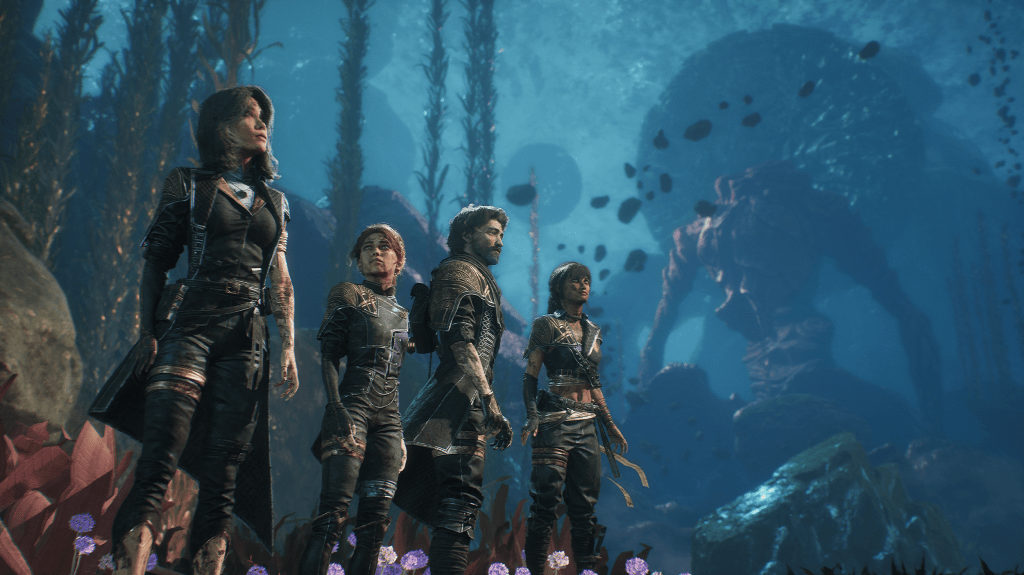
One of the most impressive aspects of Expedition 33 is how it modernizes turn-based combat without losing the strategic thinking that made the genre so appealing. For years, turn-based systems have faced criticism for being slower or less engaging compared to action-focused alternatives. Many modern iterations have attempted to update the formula, but few have managed to preserve the careful planning of traditional RPG combat while also making every encounter feel active.
Expedition 33 succeeds because it understands what makes turn-based combat enjoyable in the first place.
At its best, turn-based combat is not simply about choosing commands from a menu. It is about analyzing situations, understanding enemy patterns, managing resources, and making decisions that have consequences. Sandfall Interactive builds on that foundation by introducing mechanics that require constant player involvement. Battles are not passive experiences where players simply wait for their next turn. Attacks require timing, defensive actions require precision, elemental weaknesses are can be satisfyingly exploited, and success depends on understanding opponents in conjunction to the reliance of stronger equipment or higher statistics. The result is a combat system that feels like a conversation between the player and the enemy. Every encounter demands the player’s attention. Every mistake provides insight. Every successful parry feels gratifying and earned.
The parry mechanic is perhaps the clearest example of how Expedition 33 improves upon traditional turn-based design. A real-time defensive system could have easily felt like a simple gimmick added onto a conventional RPG structure. Instead, the parry becomes one of the Expedition 33’s most important mechanics because it changes how players approach combat.
Early battles can be intimidating. Enemy attacks are often unpredictable, and success requires players to learn timing in conjunction to selecting the strongest available option. However, as patterns become familiar, encounters begin to transform. A fight that once felt overwhelming can eventually become a carefully controlled exchange where every attack is anticipated. This creates one of the most rewarding forms of progression, where the player improves and adapts alongside the character.
Rather than sharing a common framework with only different abilities, every character is built around their own bespoke mechanics that fundamentally change how they are played. Gustave revolves around building and expending Charge to unleash devastating Overcharge attacks, while Maelle seamlessly shifts between combat stances that reward careful sequencing and adaptability. Lune harnesses elemental Stains to empower her spells and create powerful combinations, whereas Sciel manipulates Foretell to mark enemies before consuming those marks for amplified damage and additional effects. Later companions continue this philosophy, introducing equally distinctive systems that encourage players to learn entirely new rhythms of play. These mechanics ensure that each character feels like more than a collection of statistics or abilities—they become unique playstyles that demand different strategies and synergies that reward mastery in their own ways. The result is a combat system that remains consistently engaging, where experimentation is encouraged and every new addition to the party meaningfully expands the tactical possibilities available to the player.
Another key component of Expedition 33’s combat is its Action Point (AP) system, which gives every decision additional weight. Rather than allowing characters to freely use their most powerful abilities each turn, nearly every skill requires AP to activate. These points are earned and replenished through thoughtful play—landing basic attacks, successfully parrying or dodging enemy strikes, exploiting weaknesses, and utilizing character-specific mechanics. Because AP generation is directly tied to player performance, combat encourages proactive engagement rather than passive resource management. Players are constantly weighing whether to spend AP immediately on devastating attacks or conserve it for a more opportune moment, creating a satisfying rhythm of building momentum before unleashing powerful combinations. The system reinforces the philosophy that success should come from understanding its mechanics, ensuring that efficient resource management is just as important as precise execution.
Expedition 33 further distinguishes itself through its Free Aim mechanic, which grants players direct control over ranged attacks outside of standard commands. At almost any point during battle, characters can enter an aiming stance and manually target specific enemy weak points using AP. While this can be used simply to inflict additional damage, its true value lies in the tactical opportunities it creates. Well-placed shots can interrupt dangerous attacks, destroy enemy protections, activate environmental interactions, or expose vulnerabilities that dramatically alter the flow of combat. Rather than feeling like a detached minigame, Free Aim integrates seamlessly into the broader combat system, rewarding observation and battlefield awareness alongside mechanical skill. It adds yet another layer of strategic decision-making, ensuring that even outside of traditional turns, players are continually evaluating the most effective way to gain an advantage.
Traditional RPGs often measure growth through numbers. Characters level up, unlock abilities, and become stronger over time. Expedition 33 still includes those systems, but the parry mechanic introduces another form of progression—one based on player understanding.
Beyond its moment-to-moment combat, Expedition 33 introduces one of its most interesting systems through the relationship between Pictos and Luminas. Rather than relying on a traditional equipment structure where players simply replace old gear with stronger versions, Sandfall Interactive creates a progression system that encourages experimentation and gives players meaningful control over how each character develops. Pictos function as collectible items that provide characters with stat improvements and unique passive abilities known as Luminas. These effects can significantly change how a character performs in battle, offering bonuses that range from increased damage and defensive improvements to abilities that reward specific strategies, such as successful parries, applying status effects, improving AP gain, or managing resources effectively.
However, the system’s greatest strength comes from the fact that these abilities are not permanently locked to the equipment itself. After a character uses a Picto enough times, they master its associated Lumina. Once mastered, that ability can be equipped separately, allowing players to carry those effects into different builds and combinations. This creates a satisfying sense of long-term progression because every new Picto represents more than a temporary upgrade—it represents another possibility for future customization. The Lumina system adds another layer of decision-making by introducing limits through Lumina Points. Players cannot simply equip every ability they have unlocked. Stronger effects require more points, meaning each character must be carefully customized based on the player’s preferred strategy. A player might build a character around maximizing damage output, while another may focus on survivability, counterattacks, or creating combinations that reward careful timing. The system encourages players to think about how abilities interact rather than simply chasing the highest numbers available.
This design works especially well because it complements the nuanced combat philosophy. Since Expedition 33 rewards timing, awareness, and understanding enemy behavior, the strongest build is not always the one with the biggest statistical advantages. The best setup is often the one that fits the player’s approach and allows them to use the combat system more effectively. The result is a progression system that feels rewarding because it emphasizes creativity rather than replacement. Pictos give players new tools to experiment with, while Luminas provide lasting character growth. Together, they create a system where progression feels personal and where every discovery has the potential to change the way battles are approached.
While the combat system may be the most immediately impressive mechanical achievement in Clair Obscur: Expedition 33, its exploration is what truly captures the feeling of adventure. In a genre where many open worlds prioritize size over substance, Expedition 33 takes a more deliberate approach. Its world is not memorable because it is the largest or most expansive RPG setting ever created, but because every location feels carefully designed, visually distinct, and filled with purpose. The greatest strength of exploration in Expedition 33 is the feeling of genuine discovery. The journey constantly introduces environments that feel unexpectedly beautiful and harrowing, creating the impression of wonder as we dive deeper into a world filled with unanswered questions. Each new region feels like another piece of a larger mystery, encouraging players to look beyond the main path and understand more about the strange reality surrounding Lumière.
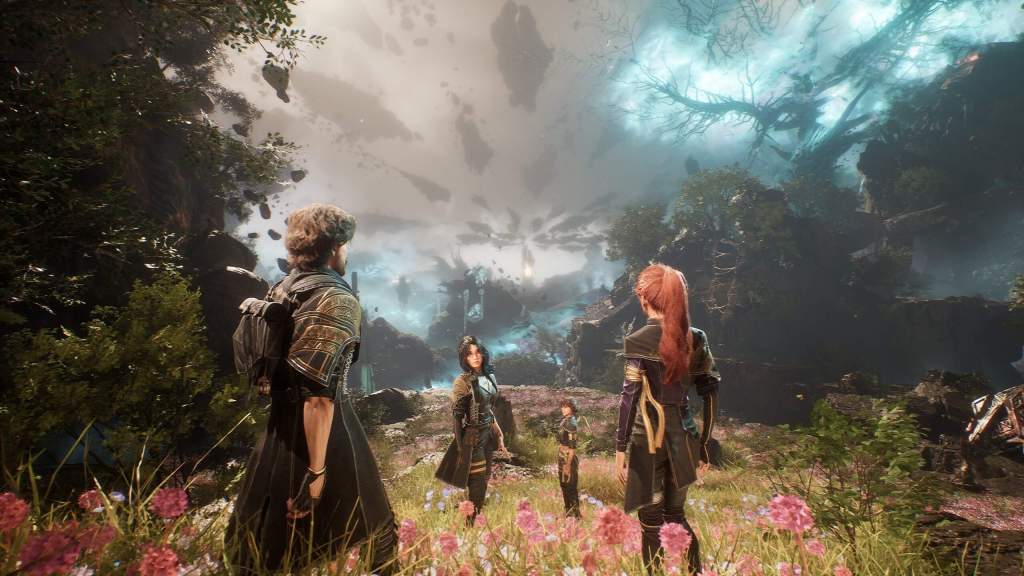
Few locations capture this better than The Flying Waters, an area that immediately demonstrates Sandfall Interactive’s willingness to embrace surreal design. A vast ocean suspended in the sky, filled with floating structures and impossible landscapes, it feels less like a traditional fantasy location and more like stepping into a living painting. The area perfectly represents one of Expedition 33’s greatest visual strengths: its ability to create environments that are simultaneously beautiful and unsettling. There is a sense of wonder in discovering such a place, but also a reminder that this is a world shaped by forces beyond normal understanding. Other locations take a different approach by emphasizing history and mystery. The Ancient Sanctuary, for example, creates a feeling of exploration through forgotten ruins and remnants of a past civilization. The Forgotten Battlefield showcases the darker side of the established world design, carrying a profound sense of loss and consequence. Rather than relying solely on dialogue to explain the world’s history, the environment itself provides clues. The player is encouraged to observe, interpret, and imagine what existed before the expedition arrived. This environmental storytelling is one of Expedition 33’s greatest strengths. The world does not simply exist as a backdrop for the narrative; it actively contributes to it.
Exploration is also strengthened by how the Expedition 33 rewards curiosity. Rather than overwhelming players with endless map markers and repetitive activities, Expedition 33 encourages an organic path to discovery. Hidden paths, optional encounters, and environmental details create moments of discovery that feel unequivocally natural. The most rewarding experiences often come from simply wondering what lies beyond the next path or over the next horizon. Each new area feels like another step into a world that is unfamiliar, mysterious, and constantly revealing something unexpected. Expedition 33 also incorporates a nostalgic overworld that harkens back to the established formula of JRPG classics. The only notable weakness is that Expedition 33’s commitment to discovery can occasionally make navigation less convenient. The lack of a traditional mini-map encourages players to pay attention to their surroundings, but there are moments where finding objectives or revisiting specific areas can become slightly frustrating due to the unconventional method of navigation. It’s a fair price to pay for its organic sense of maneuverability and discovery but getting lost is a frequent outcome.
From the moment players enter Lumière, it becomes clear that Sandfall Interactive had a very specific vision for this world. This is not simply a fantasy setting created to support an adventure. It is a world built around contrast, where elegance and decay, beauty and sadness, and hope and despair constantly exist together. The title itself reflects this philosophy. “Clair Obscur”—light and dark—captures the central tension of the experience. The world is filled with breathtaking landscapes, unique architecture, and imaginative designs, but there is always an underlying awareness that everything exists within a fragile and temporary reality. Rather than relying on traditional fantasy imagery, Sandfall Interactive draws inspiration from the Belle Époque era and beautifully harmonizes the surreal aesthetic with its meticulously calculated art direction. The result is a setting that feels both familiar and impossible—a world that resembles something from history while also feeling like it belongs entirely to another reality. Every environment feels carefully crafted, not only as a place to explore but as a reflection of the themes surrounding the story. The world often feels like a painting brought to life. It is beautiful, but there is always a sense that the beauty is temporary. This attention to artistic detail extends beyond environments. The creatures, characters, architecture, and overall visual language all contribute to a setting that feels like it has its own identity rather than simply borrowing from established fantasy traditions.
A great soundtrack does more than accompany a game. It becomes part of the memory of playing it. The right piece of music can transform a scene, elevate a character moment, or create an emotional connection that remains long after the credits roll. Some of the most memorable RPGs are inseparable from their music because the soundtrack becomes part of the player’s experience. Clair Obscur: Expedition 33 understands this exceptionally well. Composed by Lorien Testard, the soundtrack is one of the strongest parts of the journey because it perfectly reflects the emotional balance at the center of the story. The music captures the same contrasts found throughout Lumière: moments of beauty mixed with sadness, hope existing alongside uncertainty. Quiet pieces introduce a semblance of reflection and levity, whereas more intense compositions implore agency and a bombastic sentiment of scale to battles. From exquisite melodies of infectious funk to opera inspired rock anthems, each facet of Expedition 33’s expertly crafted soundtrack is masterfully designed. Years later, players may not remember every location or every conversation, but a particular melody can immediately return them to a specific moment in the adventure. Expedition 33’s soundtrack has that same lasting quality.
There is a tendency within the medium to measure ambition by scale. Bigger worlds, longer playtimes, and increasingly complex systems are often viewed as the natural evolution of the medium. While those things can certainly create incredible experiences, Clair Obscur: Expedition 33 serves as a reminder that ambition is not defined by size. Ambition comes from having something meaningful to say and having the confidence to build every part of the experience around that idea.
Sandfall Interactive has created an RPG that succeeds because every element works together. The story explores difficult questions about mortality and purpose without losing sight of the humanity at its center. Its characters transform the expedition from a simple mission into a journey worth following. The combat system modernizes turn-based gameplay through timing, strategy, and player skill. The Pictos and Lumina systems encourage creativity rather than simply rewarding progression. The world invites exploration through its artistic design and unparalleled atmosphere. Its symphonic melodies enhances every emotional moment and gives the adventure a lasting identity. None of these elements succeed in isolation. They succeed because they are connected. That cohesion is what makes Clair Obscur: Expedition 33 such a novel experience. It is not simply a great phenomenon because of the sum of its parts, it is exceptional because all of those elements work harmoniously in tandem: creating a journey about the value of the moments we are given.
What makes this achievement even more remarkable is that it represents Sandfall Interactive’s first major release. It is the work of a studio with a clear artistic identity and the confidence to tell a deeply personal story, demonstrating a conceptual understanding that the most enduring experiences are those that resonate on a human level.
Long after the credits roll, what remains is not simply the memory of extraordinary set pieces or breathtaking vistas, but the emotions they inspired. Few works manage to leave players reflecting on themes of hope, loss, perseverance, and the fleeting nature of time with such sincerity. Clair Obscur: Expedition 33 is one of those rare achievements—an experience that lingers in the mind long after it ends, and one that firmly establishes Sandfall Interactive as one of the industry’s most exciting new voices.
Expedition 33’s greatest achievement is that it understands the fundamentality of impermanence. A meaningful experience does not need to last forever to leave an impact. Sometimes the fact that something is temporary is exactly what makes it worth cherishing. It reminds us that the best adventures are not defined by how far they take us, they are defined by what they leave behind.
10


Very well written 👏
LikeLike
Mclovin it
LikeLike