
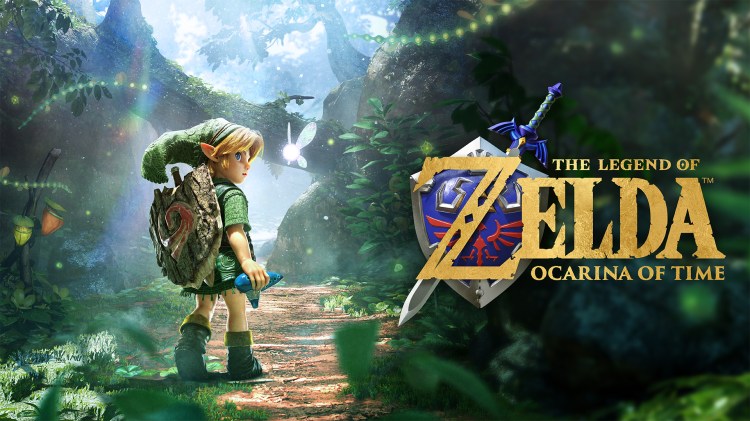
A timeless classic…
Few games in the history of the medium can claim to have influenced the contemporary architecture of 3D exploration, level design, and character movement as profoundly as The Legend of Zelda: Ocarina of Time. Originally released back in 1998, Link’s inaugural foray into the third dimension was nothing short of an undisputed achievement in interactive innovation, kickstarting the breadcrumb trail that would eventually lead to the modern renaissance of expansive open-world exploration. Prior to its arrival, developers across the industry were still grappling with the fundamental grammar of three-dimensional game design—struggling to translate the precision, spatial readability, and tactile responsiveness of 2D classics into worlds with depth and verticality. Nintendo did not merely solve those problems; it established the enduring vocabulary that countless studios would rely on for decades. Alongside its fluid maneuverability, contextual actions, and sense of boundless discovery, Ocarina of Time fostered a brilliant evolution in spatial problem-solving through creative level design intricately woven into its labyrinthine dungeons. It paired those environments with intuitive, weighty sword-and-shield combat and introduced a revolutionary lock-on targeting mechanic that anchored the camera around an enemy and served as the foundational blueprint for third-person 3D control schemes for generations to come. The leap from A Link to the Past on the Super Nintendo to Ocarina of Time on the Nintendo 64 was simply gargantuan, fundamentally redefining what an action-adventure game could look, sound, and feel like. Yet while its core building blocks and conspicuous design innovations stand the test of time with remarkable grace, its original visuals and control scheme were undeniably products of their era. With 3D graphics still in their infancy on the Nintendo 64 and original PlayStation, the blocky, low-polygon character models, jagged edges, and heavily compressed, blurry textures—while groundbreaking at the turn of the millennium—leave much to be desired when viewed through a contemporary lens. The exact same critiques can be applied to its restrictive, somewhat awkward control scheme, which was heavily dictated by the single-analog-stick hardware limitations of the late nineties, forcing players to rely on camera-centering buttons and C-buttons to manage both perspective and inventory. While some of these aged limitations were addressed through the first remaster of Ocarina of Time for the Nintendo 3DS, bringing sharper character models, stereoscopic depth, and slightly cleaner textures, the core DNA of its presentation and its archaic single-analog controls remained largely intact. It was a phenomenal experience in its own right, yet one that still carried unmistakable reminders of its age. When I played the 3DS version over ten years ago, I walked away thoroughly impressed, even if my appreciation at the time was more surface-level and instinctive than deeply reflective. Fast-forward another decade, and Nintendo has delivered a full-blown remake of the 1998 classic, built entirely from the ground up. The Legend of Zelda: Ocarina of Time on the Nintendo Switch 2 is not only exquisitely faithful to the source material, but it stands undisputedly as the definitive version of this groundbreaking tale of time. Every minute gripe and lingering technical friction has been thoughtfully addressed: breathtaking visuals and volumetric lighting that showcase Nintendo’s artistic and technical prowess, paired with a modernized dual-analog camera and control scheme that bring player input into seamless harmony with contemporary standards—all while preserving the irrevocable magic and wondrous awe that cemented Ocarina of Time as one of the greatest video games ever made. Its dungeons and cohesive weaving of unlockable tools remain a masterclass in intuitive problem-solving, deeply rewarding progression, and intricate spatial design. The music is unsurprisingly transcendent, echoing infectious melodies that range from hauntingly beautiful to effortlessly whimsical. Meanwhile, the clever juxtaposition of its time-manipulating mechanics continues to impress in both its narrative resonance and gameplay execution. The Legend of Zelda: Ocarina of Time on the Nintendo Switch 2 takes an impeccable masterpiece that had already stood the test of time and elevates it to unprecedented heights. It is simply a masterpiece reborn.
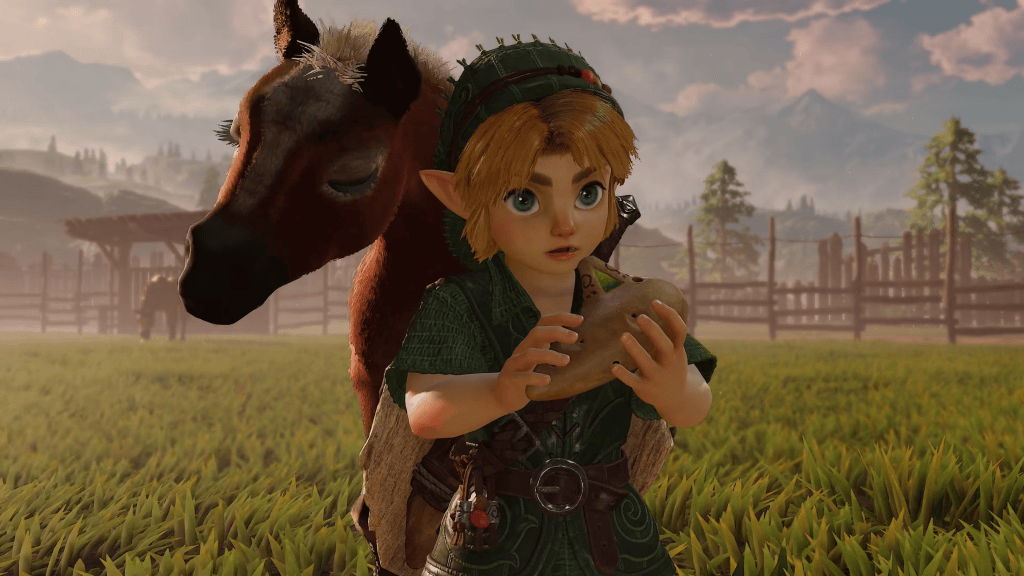
Ocarina of Time is arguably where Nintendo first hit its stride in delivering genuine narrative weight and thematic ambition for the Zelda series. What opens with a deceptive, storybook simplicity—a young boy living peacefully in a secluded forest, imbued with pleasant notes of whimsy and heartfelt sincerity—gradually unravels into a beguiling, multi-layered plot of time travel, mystery, sacrifice, and inescapable destiny. Even its ending provokes bittersweet intricacies of melancholy and quiet poignancy that I honestly overlooked upon first completing the original game years ago. Looking back at it now, with the perspective of adulthood, there is an authentic, lingering maturity woven throughout the entire duration of Ocarina of Time, accompanied by subtle undercurrents of sorrow and loss that are far more prevalent and affecting in this remake. Nuanced character mannerisms, subtle body language, and expressive facial animations communicate emotional beats that were simply impossible to evoke within the rigid hardware constraints of the N64 or the smaller screen of the 3DS. Seeing the look of uncertainty, quiet contemplation, and ineffable sadness on Link’s face as he leaves Kokiri Forest behind to venture out on his quest lends a surprisingly moving sense of tragedy to his departure that the original could only imply through static camera angles and brief dialogue. Beneath the heavy mantle of destiny, Link is ultimately still a child whose innocence and naivety are abruptly stripped away by forces far beyond his comprehension or control, quietly confronting the cost of growing up too fast. Similarly, during Princess Zelda’s apology to Link as she takes responsibility for the years of youth he has lost, you can genuinely see the heartbreak and quiet guilt in her demeanor as she struggles to meet his eyes. These are minute, delicate inclusions, yet they quietly reframe our perspective on the characters and story in remarkable ways without altering a single core beat of the script. Harmoniously paired with a sweeping orchestral score, these moments of levity and quiet tragedy resonate deeply, adding rich layers of nuance to a familiar journey that feels evocatively fresh. Visually, Ocarina of Time on the Switch 2 is exceptionally gorgeous and undisputedly the most graphically impressive game Nintendo has ever developed. With its upscaled 4K resolution, striking rays of reflective light filtering through foliage and water, and vivacious HDR that gives every scene a natural, vibrant pop of color, the remake strikes an ideal balance between modern realism and natural lighting without ever diminishing the deliberate art direction established in 1998. Rather than chasing sterile photorealism that might strip away the series’ distinct identity, Nintendo has opted for a lush, painterly tactile quality that feels like the absolute best of both worlds. From the sun-dappled greenery gorgeously overtaking the tranquil landscapes of Kokiri Forest to the crystalline, shimmering aesthetic of the intricately evolving Water Temple, every environment already possessed a distinct cadence thanks to the original’s impeccable art direction, now elevated further by modern rendering technology. You can see individual blades of grass swaying gently in the breeze, dust motes dancing in shafts of sunlight inside ancient ruins, and realistic water caustics rippling across stone walls. Character designs have received an equally resounding overhaul, introducing levels of fine detail that were simply unfeasible in any previous iteration of the series. Intricate patterns woven into the fabric of Link’s tunic and cap, delicate stitching, metallic filigree, and fine embroidery etched onto Princess Zelda’s illustrious attire, and even Navi’s stained-glass-inspired wings and soft, textured luminescence create a stunning harmony of craftsmanship while faithfully preserving the unmistakable silhouettes of the original designs. In particular, the remake’s visual overhaul makes Young Link significantly cuter and more endearing than ever before; with softer facial features, wider, more expressive eyes, and earnest, playful animations, his updated model captures his childlike innocence with remarkable warmth, making both his wide-eyed wonder and his eventual trials hit that much closer to home. Princess Zelda’s updated appearance is a notable personal highlight; her warm, composed aura of grace, intelligence, and tranquility easily makes this one of my favorite character designs in the entire franchise. Another striking addition to the presentation is the inclusion of voice acting, with a substantial percentage of the game now fully voiced during major story sequences and key character interactions. While not every line delivery across the supporting cast is uniformly flawless, I greatly appreciate its inclusion for the newfound cinematic and emotive personality it brings to Hyrule’s inhabitants, with Zelda and Ganondorf standing out as memorable vocal highlights. Zelda’s voice carries a gentle dignity laced with quiet determination, while Ganondorf’s commanding, resonant baritone lends him a chilling theatrical presence whenever he appears on screen. Combined with newly generated character animations—gone are the days of stiff, static faces resembling hollow toys, replaced instead by genuine emotive nuance, subtle eye movements, and natural posture shifts—these beloved characters feel more alive and three-dimensional than ever before. The cherry on top of this visual feast is that Ocarina of Time runs at a buttery-smooth 60 frames per second that rarely ever falters, even during particle-heavy boss battles or sweeping panoramic vistas across Hyrule. Arguably saving the best for last, the music in Ocarina of Time remains transcendent—a monumental work of art that is second to none. The compositions have been given a lush, full-bodied orchestral arrangement that honors every note of the original tracks while giving them breathtaking acoustic depth. Waves of nostalgic bliss hit your auditory senses immediately as the comforting, harp-laced notes of Zelda’s Lullaby swell across the screen, or as the infectious, driving rhythm of the Song of Storms takes hold with energetic strings and woodwinds. Even the sparse, atmospheric soundscapes of the dungeons—the distant echoes, dripping water, and haunting choral chants—immerse you completely in each space. Ocarina of Time is pure, unadulterated magic, and the remake preserves every bit of the formula that made the original so endearing while transforming its poorly aged elements into a vibrant spectacle that rivals the imaginative warmth of classic Pixar animation or Harry Potter. Across all of Nintendo’s contemporary improvements, the game’s presentation undoubtedly benefits the most from these technical leaps.
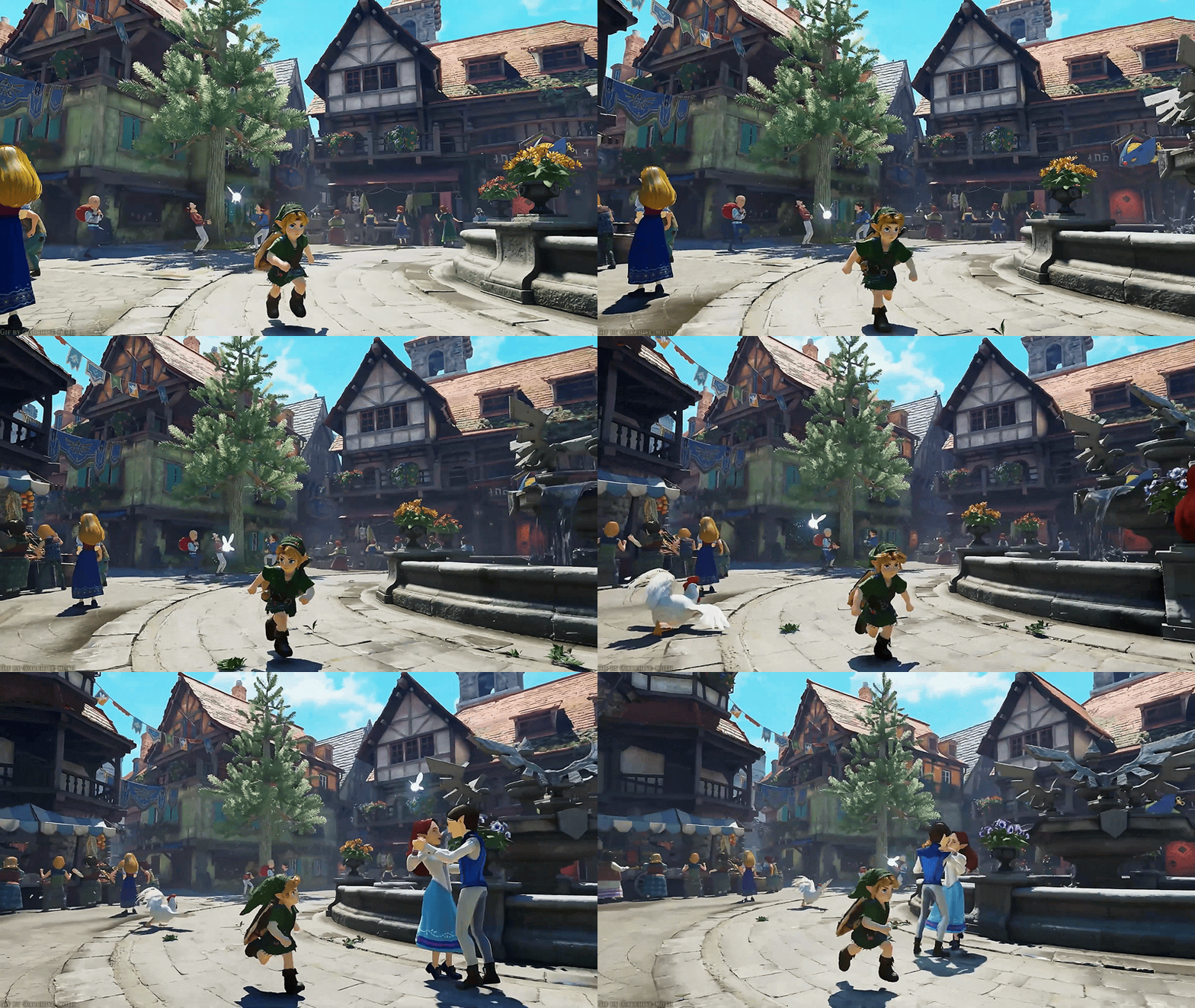
While the remake’s graphical and presentational upgrades make the strongest first impression, the overhauled control scheme is a fundamental game-changer that transforms how the game actually plays from moment to moment. Both the N64 original and the 3DS remaster were constrained by a single analog stick for movement, forcing players to constantly tap a shoulder button to snap the camera behind Link in order to orient themselves. While adding a free-use right-stick camera might sound like a minor, expected tweak on paper, it introduces an imperative dimension to exploration, platforming, and spatial navigation that feels completely natural within the game’s established structure. Being able to freely pan, tilt, and survey your surroundings while navigating the eerie, winding trails of the Lost Woods, gauging jumps across crumbling platforms, or swimming through the mind-bending verticality of the Water Temple brings the experience effortlessly in line with modern game design. Even a simple stroll through Hyrule Castle Town feels completely revitalized, as the original’s fixed camera angles and flat, low-resolution pre-rendered backgrounds feel positively archaic beside the remake’s fully realized, freely explorable 3D spaces. Having the freedom to inspect and take in the fine architectural details of the bustling marketplace, peer up at the towering spires of the castle, and watch townsfolk go about their daily routines lends a far stronger sense of authenticity and believability to Hyrule as a living, breathing world. That same thoughtful modernization extends seamlessly to early set pieces like sneaking past the guards at Hyrule Castle, which has been reworked significantly for the better. In the original release, this stealth sequence was confined to a fairly rigid, repetitive series of outdoor courtyard gardens with predictable patrol paths. Here, the remake opens up both the exterior castle grounds and several interconnected interior wings, letting you explore, hide behind pillars, clamber across ledges, and traverse through distinct sections of the fortress on your way to meet Princess Zelda. This expanded layout makes the infiltration feel far more organic, cohesive, and genuinely enjoyable, turning what used to be a minor obstacle into a memorable early showcase of the remake’s improved movement and spatial design. Equally transformative—and far deeper in its impact than it initially appears—is the remake’s introduction of a dedicated jump button. What seems like a simplistic novelty on the surface adds a subtle layer of spatial depth that alters your perspective on once-familiar exploration. Replacing the 1998 original’s automatic, ledge-bound leaps with manual control grants newfound verticality and freedom, letting you clear low obstacles, navigate chasms with precision, and inspect familiar terrain from fresh angles without breaking the world’s careful design. Those modernizations to movement, level flow, and spatial awareness carry directly into the masterful level design of the dungeons themselves. Already exceptional in their own right, these immersive labyrinths of clever problem-solving and gratifying discovery take on a radiant new life with contemporary controls. Even the notorious Water Temple receives a welcome, streamlined quality-of-life upgrade, preserving its intricate architectural layout and immense sense of reward while smoothing out the tedious friction that historically tested players’ patience. Defined by clever verticality, shifting water levels, and Metroidvania-inspired backtracking, the Water Temple stands as an intricate, three-dimensional puzzle box packed with some of the most thrilling spatial problem-solving in Zelda history. With clearer visual signposting on the walls indicating where water-level switches lead and far smoother underwater swimming physics, you can finally appreciate the sheer brilliance of its design without getting bogged down by disorientation. The Forest Temple remains an enthralling labyrinth of mystery and intrigue, juxtaposing gothic stone architecture reminiscent of classic Resident Evil’s eerie atmosphere with lush vegetation gradually reclaiming its shadowy corridors. Its haunting, percussive ambience, twisted hallways, overgrown courtyards, and unsettling portraiture create an environment that feels as beautiful as it is unnerving, easily cementing it as one of the game’s most memorable and atmospheric dungeons. Meanwhile, other late-game temples continue to push the series’ creativity—whether navigating towering iron cages and roaring pillars of flame inside a volcanic crater, or braving subterranean labyrinths steeped in macabre horror and optical illusions. Then there is the Spirit Temple, which masterfully weaves the game’s time-bending mechanics across past and future eras into interlocking cause-and-effect puzzles, culminating in an extraordinary, elementally charged boss encounter that remains an absolute series highlight. Further strengthening the worldbuilding, every town and habitable settlement across Hyrule feels richly realized and brimming with idiosyncratic charm. From the sweltering, subterranean bustle of Goron City and the tranquil, crystalline beauty of Zora’s Domain to the puzzle-filled warmth of Kakariko Village nestled at the foot of Death Mountain, these memorable locations overflow with creativity and distinct cultural personality. Characters like the heartfelt, hard-working Malon at Lon Lon Ranch and Link’s loyal childhood friend Saria in Kokiri Forest anchor their respective regions and reflect the spirit of their homes, while the enigmatic Sheik exudes an unmistakable aura of intrigue and quiet wisdom that builds steadily toward one of the series’ most iconic narrative reveals. That quiet sense of wonder, dread, and unease as you cautiously revisit familiar places seven years in the future never ceases to amaze me. Seeing how once-peaceful settlements and thriving regions have been dramatically reshaped by the passage of time and dark magic communicates the weight of your journey far more effectively than any lengthy monologue ever could. Each locale and dungeon is expertly paced across the timeline, consistently rewarding player agency and curiosity. Between these major destinations, Hyrule Field serves as a centralized hub for relaxed discovery—and I mean that in the best possible way. While Hyrule Field felt notably sparse and barren in the N64 and 3DS versions, in the remake it functions as a refreshing palate cleanser between the richly paced, high-stakes dungeons. Stepping out of the sheltered canopy of Kokiri Forest for the very first time to take in the sweeping, sunlit vistas of Hyrule Field remains an unforgettable moment in gaming, capturing an unmatched sense of wonder, scale, and possibility. Its rolling green landscapes, dotted with wildflowers, rushing rivers, and distant landmarks beckoning on the horizon—paired with that iconic, dynamically shifting overworld theme—offer a blissful breather as you explore the distinct mini-biomes scattered across the plains, seamlessly connecting Hyrule’s major regions into a cohesive whole. Although crossing its expansive terrain on foot can feel somewhat daunting early on, especially as sunset approaches and skeletal creatures emerge from the earth, traversing the plains becomes effortless and exhilarating once you earn a trusted companion in Epona. Galloping across the open fields on horseback, leaping over fences, and firing arrows from the saddle feels remarkably responsive. Despite the open, interconnected feel of Hyrule Field, Ocarina of Time remains a structured, linear adventure—and in an era dominated by open-world bloat, sprawling empty maps, and endless checklist fatigue, that focused design feels remarkably refreshing. Viewed alongside contemporary entries in the franchise like Breath of the Wild and Tears of the Kingdom, which routinely demand upward of eighty to a hundred hours of sprawling exploration, Ocarina of Time can appear almost bite-sized by comparison. Yet its tightly paced, 25-30 hour runtime is one of its greatest virtues: every hour is dense with purpose, delivering a steady, addictive loop of curiosity and genuine discovery that respects your time and never once overstays its welcome.
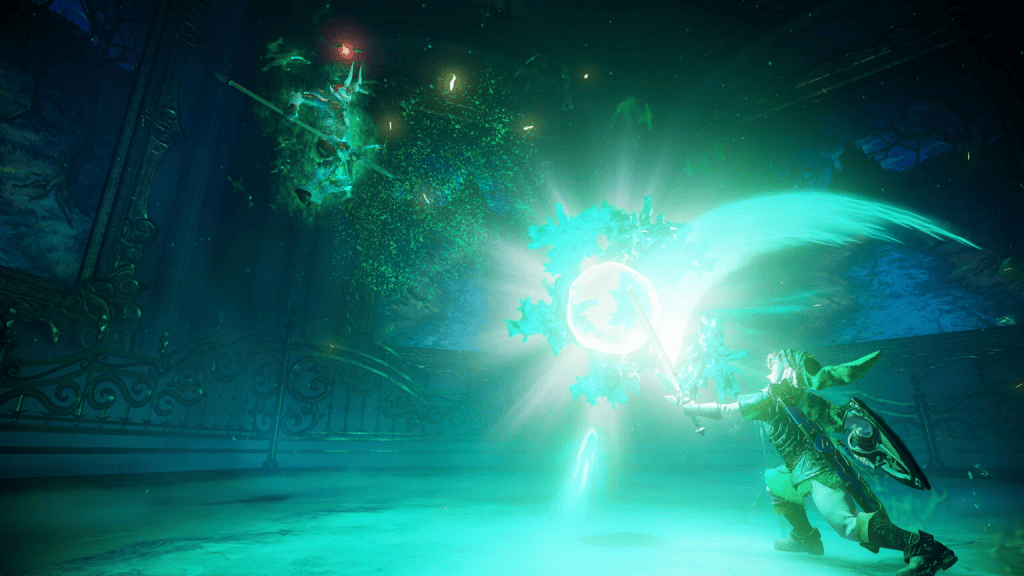
The remake’s greatest achievement lies in recognizing that the original’s core gameplay and level design remain timeless, wisely preserving the vast majority of what made the experience so enduring in the first place. Combat retains a clean, straightforward rhythm that reinforces a steady sense of empowerment and progression, anchored by the pioneering lock-on targeting system that shaped modern 3D action games. Circling an armored skeleton warrior or a towering axe-wielding knight with your shield raised, waiting for an opening before unleashing a well-timed jump slash or parry, still feels tactile and deeply satisfying. Free-aim targeting has also been subtly refined with the addition of a crisp, responsive crosshair that eliminates artificial frustration, while optional gyro aiming proved surprisingly intuitive and quickly became my preferred way to line up precise shots with ranged weaponry. Enemy variety keeps encounters engaging without ever pulling focus away from the game’s greatest strength: its intricate dungeon design. ReDeads remain pure nightmare fuel, their zombie-like gait, hollow eyes, and bone-chilling screeches that freeze Link in his tracks still sending shivers down my spine, while creepy, disembodied Floormasters bring an unmistakable sense of dread whenever their ominous shadows begin to widen overhead. Boss battles are consistently entertaining—from trading volleys of dark magic in a classic energy-tennis match against Ganondorf to weathering Twinrova’s spectacular elemental assaults—each encounter cleverly testing your mastery of that dungeon’s signature item. From a pure combat standpoint, I will note that the remake feels noticeably easier than earlier versions, largely because the responsive dual-analog controls, smoother frame rate, and modern conveniences prioritize fluid play over dated friction. Beyond the main adventure, the remake introduces the Hall of Statues, an addictive gauntlet mode that pits you against consecutive bosses in a high-stakes test of endurance. Earning mode-exclusive currency between bouts lets you purchase temporary items, restorative supplies, and utility upgrades, adding a light roguelike layer of resource preservation and tactical decision-making that gives the combat endless replayability. Even so, exploration and discovery remain the true heartbeat of Ocarina of Time, and unearthing an illustrious new tool deep inside a labyrinth still sparks pure, unadulterated joy. Few things beat the satisfaction of reaching previously inaccessible ledges with the extended reach of the Hookshot, uncovering hidden secrets with specialized lenses, or smashing through stubborn boulders with the Megaton Hammer. Items are thoughtfully integrated into their respective dungeons, frequently requiring you to combine multiple tools in creative ways to advance—encouraging a playful spirit of trial and error that laid the groundwork for the systemic experimentation of Breath of the Wild and Tears of the Kingdom. Inventory and item management have also received a welcome overhaul inspired by those modern entries. Rather than constantly pausing the action to open a subscreen and assign gear to customizable face buttons, holding the R button brings up a clean horizontal quick-select bar cycled smoothly with the right stick, slowing time just enough to let you swap tools mid-battle without breaking immersion. Better still, situational gear like the Iron Boots can now be toggled directly with a simple D-pad press, completely eliminating the cumbersome, immersion-breaking menu-diving that historically bogged down the Water Temple. Equally central to both puzzle-solving and storytelling is the titular Ocarina. Across the adventure, you gradually learn a repertoire of melodies essential to progression, environmental puzzle-solving, and fast travel—whether proving your ties to the Royal Family to gain access to Death Mountain with Zelda’s Lullaby, reviving a dried-up oasis with the Song of Storms, or warping directly to distant temples via evocative travel melodies. The customizable Scarecrow’s Song remains a standout touch, letting you compose your own tune to summon a helpful scarecrow in otherwise unreachable spots, offering a small, personal sense of creative ownership over your journey that has rarely been replicated. As a fun, albeit gimmicky Switch 2 bonus, the console’s built-in microphone can even recognize live audio, letting you sing, hum, or play the corresponding notes on a real instrument to register melodies in-game. Beyond the main quest, collectibles and hidden upgrades add rich layers to the worldbuilding and reward thorough exploration. Solving clever environmental puzzles—whether firing a standard arrow through a ring of sunlight at dawn or wearing the Iron Boots to smash underwater crates with a timed roll—highlights how thoughtfully the game encourages lateral thinking and creative item use. Tracking down Golden Skulltulas scattered across Hyrule remains an addictive diversion, with their distinctive scratching sounds signaling hidden alcoves and their tokens unlocking valuable upgrades like Pieces of Heart and larger wallets to hold your Rupees. Uncovering hidden Great Fairy Fountains tucked behind cracked walls or secluded paths offers another memorable layer of discovery, as offering a generous Rupee donation to these ethereal beings rewards you with wondrous gifts—from expanded magic reserves and potent defensive blessings to powerful offensive spells that dramatically elevate Link’s capabilities. Equally ingenious is the Happy Mask Shop side quest, a charmingly understated expedition that rewards subtle social problem-solving and keen observation. Rather than handing you overt map markers, the quest asks you to pay attention to the personalities and desires of Hyrule’s eccentric residents—matching the right mask to the right quirky character across different regions, from a daydreaming guard to a nocturnal runner, and uncovering hidden interactions in the forest along the way. It implores explorative sightseeing and transforms simple fetch-and-deliver errands into a delightful tour of Hyrule’s offbeat charm, culminating in playful rewards that celebrate curiosity. Stray off the beaten path, and you are consistently rewarded—whether pawning off eccentric masks to Hyrule’s colorful residents or embarking on a sprawling, multi-step trading sequence across time to forge a mighty weapon of destruction. Every corner of Hyrule feels purposefully crafted, ensuring that curiosity is almost always met with a tangible reward or a memorable character interaction.
The Legend of Zelda: Ocarina of Time is one of the rare games that left me with a genuine sense of melancholy when the credits finally rolled. Beyond the bittersweet poignancy of its narrative conclusion, realizing that an adventure so magical had finally come to a close left a quiet, lingering ache. It is the ineffable sadness of knowing that, no matter how many times you return to Hyrule, you can never experience it quite like this for the very first time again. Yet at its core, Ocarina of Time is pure, unfiltered joy, radiating warmth, imagination, and earnest heart. Its classic tale of light enduring against darkness still brings a genuine smile to my face, while its temples and dungeons strike a rare balance of masterful ingenuity and deeply satisfying problem-solving. The Ocarina itself endures as both an indispensable gameplay mechanic and an iconic narrative centerpiece that ties every thread of the adventure together. Combined with its revitalized graphical fidelity, vibrant HDR colors, intuitive modern controls, and thoughtful quality-of-life fixes, the Switch 2 remake stands shoulder to shoulder with—and frequently surpasses—modern releases. Its immaculate musical score remains a bona fide masterpiece that transcends conventional standards, while the shifting cause-and-effect dynamic between past and future was a design feat years ahead of its time—capturing the bittersweet truth of growing up in a world that keeps moving forward without you. Somehow, it strikes an extraordinary equilibrium between hopefulness and sorrow. Whether this imaginative retelling stirs a warm wave of nostalgia for a simpler time or introduces a new generation to an undisputed icon with the visuals, fluidity, and controls it always deserved, Nintendo has accomplished something truly remarkable: taking one of the greatest video games of all time and making it even better.
10

