

The clown prince of JRPGs…
While my thoughts on the Shin Megami Tensei subseries may evoke a questionable sense of bias, piercing through any form of clouded judgment was surprisingly effortless as Persona 5 is an absolute delight, regardless of my attachment to the series. As I’ve mentioned profusely, Persona 4 Golden is my favourite video game of all-time, and my biased standpoint stems from the sheer fact that this experience saved my life. With that rather audacious statement declared, expectations for its sequel were undoubtedly and unfairly monumental; Persona 4 was an enlightening experience that impeccably resonated with every beat of my contemporary life at that point in time. Persona 5 not only meets those gargantuan expectations, but somehow manages to surpass its predecessor in nearly every conceivable way, illustriously defining the definitive Persona experience. Persona 5 is an intricately designed experience that exudes an unparalleled aura of stylistic charm, with its immaculate presentation placed in a profound echelon of its own. Its engrossing plot manages to weave elements of moral intensity, corruption, unity and friendship, throwing in plenty of twists and turns that construct a sound and compelling narrative that is objectively the best in the series. While dozens of returning elements foster the core structure that we’ve come to expect, welcome new additions are added into the mix to create the most streamlined, accessible, and smooth Persona experience to date. Character development and gameplay are seamlessly entwined, with each element inherently affecting the other, the simplistically complex battle-system is a refined work of art that bears an untouched stylistic aesthetic, and the excellent new Mementos system provides a refreshing approach to longevity and level grinding, justifying its questionable existence. While my initial impression of Persona 5’s characters didn’t initiate a euphoric spark of comfort and reliance, I admittedly grew to love them throughout the emotional journey. Persona 5 is undoubtedly the most polished entry in the series as its intricately designed gameplay systems and captivating narrative points are stellar examples of this genre’s iconic framework and impressive capability. Persona 5 is a masterful work of art that outlines the beauty and strength of our relationships, while provocatively ushering a rewarding sense of justice. It evolves the established formula to resounding new heights, blessing us with some of the most poignant and loveable, characters, tantalizing story beats, and infectious auditory tunes to have ever graced this industry. Persona 5 is objectively the best game in the series and is a bonafide masterpiece.
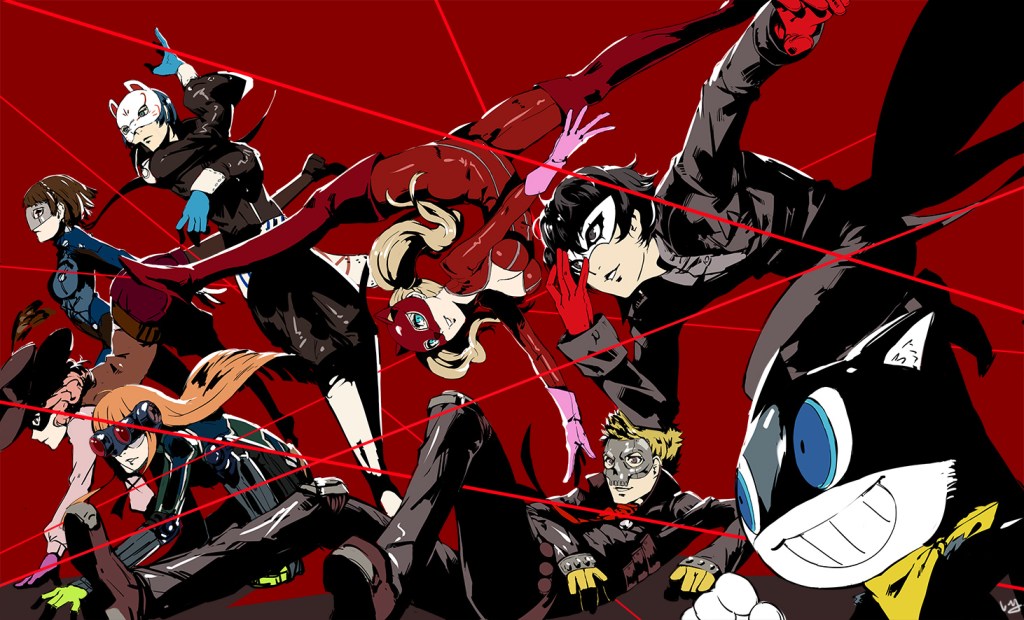
Unlike the fictional cities of the past iterations, Persona 5 solely takes place in the illustrious Tokyo, incorporating a tangible sense of realism normally absent from the core series. While its narrative follows the tried and true staples the series has fostered over the many years – embodying the role of high schoolers by day, and acting as extracurricular masked vigilantes by night – it still manages to weave new elements and surprises to construct an invigorating aura for veterans of the series, while never overloading the nuanced palettes of newcomers. Persona 5’s narrative opens in medias res, an excellent method of exposition that further strengthens the overarching mystery and pacing, filling in narrative pieces in this immense over-arching puzzle. After its bombastic opening and mysterious set-up, the story begins to slow down considerably – which is a common element of not only the Persona series, but JRPG’s as a whole. Do not fret, as these tedious elements are immediately rectified once the narrative regains its propelling momentum. At its core, Persona 5 is a compelling story centered on unity, justice, friendship, and acceptance, topped off with the inspiring resolve of a collective rebellion against a corrupt and oppressive society. Persona 5 is not afraid to shy away from thematic elements of abuse, sexual assault, extortion, plagiarism, and suicide; a profound reflection of the systemic problems that plague contemporary society. Persona 5 also delivers an intricate thesis on the true definition of justice and rehabilitation, with shades of grey and empathy bleeding into character motivations, developing conflicting resolutions that are defined by strong resolves as opposed to simplistic villainy. The second half of the narrative is exceptionally well-done, topped with an extremely clever plot-twist that brilliantly unravels once the narrative reaches full circle. This engaging, yet linear focus to exposition is one of Persona 5’s greatest strengths, resulting in one of the greatest vigilante thrillers of the generation that consistently subverts expectations and routinely flips the profound notion of the established formula. With its heavy emphasis on the core narrative creating a revolving semblance of deliberation that is aggressively tantalizing and remarkably eloquent, it would be understandable for its surrounding parts to not receive the required TLC. Luckily, this is never the case, as its ingenious narrative design constantly evolves throughout each captivating development, while seamlessly weaving intricate devices into its narrative fold, further elevating the sum of its parts. Its integral focus on character development is an undisputed highlight of exceptional reverence and writing, with each unwoven thread embodying heartwarming resolves that are an absolute pleasure to behold. Persona 5 continues the series’ staple of confronting difficult notions of self-harm, depression, anxiety, and self-acceptance. Each character’s respective revelation of euphoric contempt is unabashedly heartwarming and further echoes its primary reverberations for moments of poignant levity. From the endearing yet stoic resolve of Makoto, to the charmingly enigmatic aura of Akechi, Persona 5’s characters are dynamically composed and exceptionally well-written, synergizing with its thematic notions of rebellion and discovery. The Persona series continues to lead as a resounding staple in localized, voice acting, with Persona 5’s English voice cast delivering remarkable performances that authentically feel definitive and tangentially poignant, never settling as a second class alternative to the original Japanese voice cast. Dungeons take place in Palaces created within the metaverse as a manifested product of each distorted target, as opposed to the conflicted internal manifestation of your allied characters – this altered form of personal connection lacks the emotive weight and resonance of Persona 4 as the spotlight is predominantly cast between the allied character and the corrupt target as opposed to the deliverance of responsibility gathered through the profound discovery of self-actualization and self-love. Although the labyrinths of reflection take the form of cognisant distortions of the corrupt individuals, each target is responsible for the oppression and abuse of a primary character, acting as a catalyst for their self-actualization and rebellion, adding a welcomed touch of personal attachment and weight to the dungeon and its transpiring events. A notable highlight of Persona 5 is its exquisite sense of style – from the impeccably funky music to the wonderfully idiosyncratic menus, UI, and aesthetics, nothing comes remotely close to Persona 5’s sense of stylistic creativity and ingenious personality. Topped off with its gorgeous anime cutscenes, Persona 5 is a vibrant spectacle that is extraordinary to behold. Shoji Meguro’s legendary compositions in Persona 5 are downright electrifying; from infectious melodies of radiating funk to the crunchy resonance of its roaring guitars, Meguro’s versatile works of art culminate into one of the greatest soundtracks of all time. Persona 5 is a ineffably rich showcase of impeccable presentation that is further accentuated by its captivating narrative that is not only the best in the series, but a brilliant showcase of masterful proportions that stands tall in comparison to the JRPG greats.
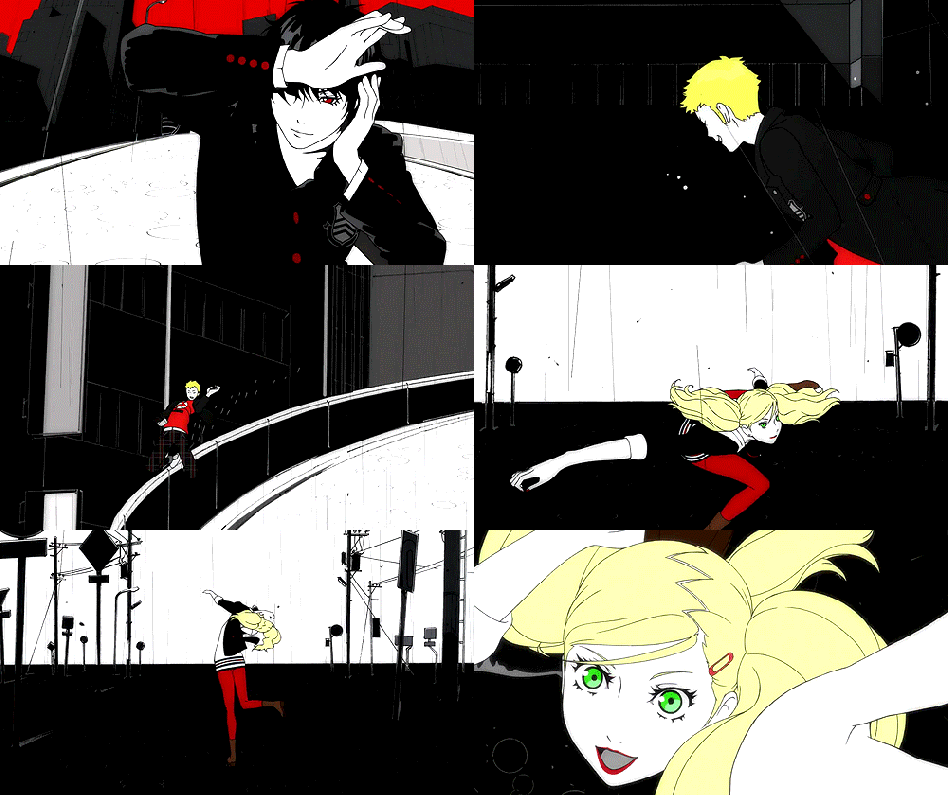
A good majority of time spent in Persona 5 will have you partake in enthralling confrontations, and luckily the core battle system is mechanically sound and immensely enjoyable, so it’s time well spent. The turn-based system is chock full of JRPG standards – the usual flair of melee attacks, ranged attacks via the newly added firearms, offensive and defensive magic skills – but adds a few elements that are more intrinsic to the Persona series. Exploiting enemies’ elemental weaknesses is an integral strategy as the moment every enemy is downed by their respective weakness, an opportunity to perform an all-out attack becomes available – a full frontal assault that inflicts additional damage. Once you down an enemy by attacking their weakness, you’ll receive “1 more” turn, which is an opportunity to follow up with another action of your choice or you can perform a baton pass and give that extra turn to another character. It’s an excellent new ability that adds an unique level of strategy to an already well-developed battle system. Aside from performing an all-out attack, you can also hold up enemies with the new negotiation system. You can choose to negotiate with the enemy shadow for additional money, items, or for them to join your cause. As opposed to the random nature of Persona collection in the previous entries, Persona 5 implements a far more tangible and enjoyable system for Persona gathering. Depending on the shadow’s emotional stature and your selection of dialogue, the shadow can become a Persona of your own in the form of a new mask. As a holder of the wildcard ability, you are able to hold multiple Personas and switch between them during battle – each of which have different abilities, vulnerabilities, elemental strengths, ailments, and garner experience outside of your own experience pool. The ability to hold multiple Personas permits a glorified sense of experimentation as you are able to fuse Personas to create new ones. Persona fusions are performed in such a gloriously violent manner. With its heavy themes of incarceration, Personas are fused through colourful execution via the guillotine. It’s a superficial detail that doesn’t offer any technical substance but it is this unapologetic demeanor that oozes an unrivaled sense of style and deliberation that gives Persona 5 its untouchable inertia. Strategic ambushes are easier to execute in Persona 5, with an automatic yet cinematic flair added to their process. As opposed to the simplifications of running to an unaware shadow and preemptively attacking them from behind to initiate the ambush, Persona 5 allows you to take cover and cinematically dash between cover and leap onto a shadow’s back, removing its mask to initiate an ambush. There is also a heavier emphasis on status ailments in Persona 5 through the introduction of Technical Attacks. Accentuating another layer of strategic complexity to its engrossing combat system, Technical Attacks can be executed when combining the correct elemental attack with an enemy’s status ailment, dealing devastating damage that rivals the tried and true weakness exploitation. As I previously mentioned, dungeons now take the role of Palaces – the cognitive manifestation of the distorted target – which are fundamentally superior in level design than anything the examples of yesteryear dished out. With Persona 4’s dungeons, each one boasted their own aesthetic variances and visual design, but each floor and respective section of a dungeon felt decisively repetitive and stagnant, with the actual floor layout being procedurally generated. Persona 5 is far more calculated and deliberate in design compared to its predecessor, which works in its favor as each piece of the Palace serves a purpose and fundamentally feels different, both in aesthetics and design. Palaces are handcrafted and offer a slew of different tantalizing approaches to alleviate the traditional sense of repetition as there is a healthy amount of shortcuts, hidden treasure, and optional enemies to encounter throughout your infiltration. Palaces are heavily guarded by the aforementioned shadows, protecting the cognition of this distorted realm. Each Palace has a security level that represents the shadows’ and distorted entity’s awareness of the Phantom Thieves’ presence within the Palace. The security level will increase if you are spotted by an enemy shadow or if you decide to escape from battles. Higher security levels will increase the enemy encounter rate, which can lead to additional waves of shadows being required to battle during a single encounter. However, this risk also increases the chance of finding Treasure Demons, which players can defeat to retrieve rare loot. If this added sense of agency is not your cup of tea, then there is no need to fret as the security level can be lowered by performing ambushes and defeating shadows. This engaging system of reflection is another layered element that highlights the dynamic and deliberate flexibility of Persona 5’s Palaces. Lastly, boss fights are vastly superior to the standards set in Persona 3 and 4 – with each fight flaring its own set of identifying tendencies to separate the encounter from the general mass. Some boss fights require you to temporarily send a teammate onto the sidelines to use the environment to negate an impervious enemy, all while your shortened party bides time and distracts the boss. Other encounters incorporate an enticing roulette mini-game, luring a glutinous boss with a rare item, sending a teammate to maneuver and launch a visceral javelin, and using a boss’ own vulnerability paint to even the odds – all of which make their respective boss fight feel distinct and fully fleshed out.

Once you complete a Palace, it is inevitably destroyed – which all makes sense within the context of the narrative – and cannot be visited subsequently, which one would think leaves little room for level grinding. Well smartly enough, Persona 5 still incorporates the procedurally generated construct that occupied most of Persona 3 and 4, but has it act as a secondary element purely for the sake of longevity and level grinding. So even though you cannot return to Palaces upon their completion, you can continually return to Mementos, a procedurally generated area that acts as the collective cognition of the collective masses, taking the form of the underground subway system that warps its reality based on society’s distorted perception on concepts and events. There are different sections within Mementos that display minute aesthetic differences, but each floor in the respective section is practically identical to one another but provide a random layout by design, with new floors being generated based on story progression. Here, players can explore the subsequent depths of Mementos to level grind and discover hidden treasure randomly scattered throughout the plains of this bleak subway. The spiraling depths of Mementos also contain some of the more difficult and rare enemy encounters, such as the chain shackling horror of the notoriously arduous Reaper, with bountiful rewards being endowed for overcoming the extra challenge. Most importantly, Persona 5 incorporates a genius request system which takes the form of the familiar side quest structure; followers of the Phantom Thieves – your band of masked vigilantes – will make requests for your group to target individuals whose crimes are smaller in scope but still require attention. These individuals’ cognitive selves are located within the depths of Mementos, and while these encounters are nothing more than minute vignettes with an absence of tangible weight, they are a welcome additions to an already engrossing experience. There are only a select few requests that provide emotional development and purpose; these requests are earned through the development of your confidants, your relationship between select individuals that provide both abilities in the gameplay front and invigorating development on the narrative side.

Persona 5 is in every way a traditional dungeon crawling JRPG but it is also an intricate social simulator that adds a significant level of character development that is unrivalled in the JRPG catalogue. First and foremost, forming bonds and relationships – which are addressed as the aforementioned confidants in Persona 5– is the crux of the series’ social sim aspect and is arguably the best part of the Persona experience. Each confidant is tied to a specific arcana, which in relation affects the Personas tied to that arcana. Developing your bonds between your confidants not only provides an engrossing optional story but also unlocks imperative abilities, relevant stat increases, and additional experience when fusing a Persona of that specified arcana. Spending time with specific confidants will unlock abilities that are entirely optional but ultimately are essential for their illustrious gameplay enhancements. Abilities range from swapping out party members mid-battle, unlocking the aforementioned baton pass, allowing you to explore the city at night after infiltrating a dungeon during the day, recruiting Personas without having to negotiate, allowing sidelined party members to perform a random attack, performing a cinematic gun attack that will automatically down an enemy regardless of their resistances, or having benched members accumulate the same amount of XP as the active party. Through this, the act of developing bonds seamlessly affects the nature of gameplay in a manner that is effortlessly cohesive and rewarding. Time management is extremely important in Persona 5, so having these abilities to elongate your managerial decisions is essential. Offering so many different time consuming options in a finite amount of time, these decisions bear significant weight and provide a nuanced sense of challenge that one might not expect when delving into a JRPG. You can read a book which will increase a relevant social stat – such as charm, guts, kindness etc. -, spend time with specific confidants that are available that day, partake in a slew of different activities such as fishing or batting cages, cook some delicious curry for SP recovery, study in the school library, earn some extra cash at a part-time job, or explore a dungeon or Mementos, all of which doesn’t even begin to scratch the surface of what Persona 5 has to offer. There are so many different complex systems that are relatively overwhelming and its time management system is a lot to juggle but it’s also a tremendously rewarding experience when you max out a confidant or social stat, and lamenting over any missed opportunities or questionable decisions makes the New Game Plus system all the more beautiful.

Persona 5 Royal
Through its enhanced version released in 2020, Persona 5 Royal introduces a myriad of quality of life changes and a bevy of new engrossing additions, such as new characters and improved social links, a new palace to explore, and a third semester ripe with alluring intrigue and mystery, all of which profoundly elevate Persona 5’s illustrious stature to meteoric heights, pristinely crafting the undisputed, definitive Persona experience that transcends the perfection that made the vanilla rendition so beloved. It is a quintessential success study on how to make a masterful experience even more perfect. A bountiful number of new activities have been added through the Royal enhancement, all of which provide additional opportunities to spend time with your confidants and, in expected fashion, provide integral combat benefits for your Phantom Thieves. Playing darts will allow each party member to rank up their Baton Pass rank, with each rank incorporating buffs such as increased damage and HP/SP recovery, upon receiving the Baton Pass. Technical Attacks can be ranked up by playing billiards with your party members, increasing the attack damage and granting a greater chance to down enemies. Showtime Attacks are another ingenious and stylistically flamboyant element brought to life through Royal. Showtimes are combination attacks performed between members of the Phantom Thieves. These abilities are unlocked throughout the story and occur during battle at random. Taking the form of a hilarious cutscene that translates to devastating Almighty damage, Showtimes further exemplify Persona 5’s idiosyncratic and unrivaled charm; from Morgana and Ann’s shoujo anime inspired showcase of disastrous unrequited love to Makoto and Haru’s outrageous display of wrestling finishing moves, each Showtime combination boasts a remarkable cinematic flair that appropriately fits within Persona 5’s exquisite repertoire. The Velvet Room has been enhanced in Persona 5 Royal, further incentivizing visit frequency for potential rare fusion combinations and results. Upon completing normal shadow encounters in the Metaverse, there’s a chance for a fusion alarm to trigger. Any Persona fused during this active window will result in more powerful creations as opposed to being fused during normal circumstances. There are also chances of the Persona’s abilities being replaced with more potent versions during a fusion alarm. However, overusing or abusing a fusion method during an alarm may result in an accident, creating some obtuse and unexpected results. It’s an engaging risk and reward mechanic that further enhances the established foundation of the original’s pristine systems. Speaking of enhancements to defined systems, the role guns play has been intricately reworked, imploring a reimagined sense of deliberation and strategic thinking. Bullets now refresh after every encounter instead of solely at the beginning of an infiltration, however the total number of ammo you can hold is lower. The newly defined rules of this established mechanic allow gun attacks to always be viable, completely overhauling their function into a far more versatile and reliable tool. On top of their functional shift, gun customization has also been enhanced, providing new options such as adding the chance to apply status effects, offering a rewarding sense of flexibility to the previously underbaked mechanic. Mementos has also received a nice overhaul in Persona 5 Royal, with its notoriously repetitive stature being alleviated through the rewarding introduction of new collectibles such as Flowers and Star Stamps, which are sprinkled generously throughout the spiraling depths of Mementos. Flowers can be traded in at a new shop in Mementos for useful items and Star Stamps can be used to change the cognition of Mementos, improving the rate at which rewards are given. Not only are new areas introduced in Mementos that provide a welcome sense of aesthetic levity and diversity that aids in its repetition, but you are also able to take down shadows immediately if your level is significantly higher, removing a lot of the monotony and busy work of exploring Mementos. Speaking of exploration, Persona 5 Royal introduces the tried and true gaming staple of a grappling hook, allowing for more strategic ambushes on shadows and encompassing rewarding discovery and exploration. Through the introduction of the grappling hook and the nature of its sprawling design, each Palace has been revamped to support the structural and explorative ingenuity of this mechanic – with new collectibles and tantalizing goodies being intricately placed within these labyrinthian corridors to take full utilization of this lavish tool. However, the largest update in Persona 5 Royal is the addition of new party member Kasumi Yoshizawa and the school counselor Takuto Maruki, both of which receive the illustriously robust confidant treatment but also have integral narrative implications to the newly added third semester. Without getting into spoiler territory, both characters are doused with intricate layers of tragedy and showcase stoic, yet conflicting resolves, all of which culminates in a series of events that will impose self-conflicting questions for your own morality. These poignant moments of empathy and shades of grey are impeccably weaved within Persona 5 Royal’s new Palace, which masterfully bleeds into the cognitive dissonance inflicted from the novel narrative elements and empathetic character decisions. Brilliant moments of tranquil levity have also been sprinkled into Persona 5 Royal; from an updated version of the established Valentine’s Day date to the romantic ingenuity of the newly added White Day, these euphoric elements of comic relief and brevity strike a resounding balance to the generally stoic demeanor that Persona 5 typically wears. Continuing its thematic elements of incarceration, rehabilitation, and execution, you can have your Personas executed via the electric chair to itemize their inherent power in the form of useable and equippable items such as skill cards or weapons. It is a small example of the deliberate flexibility and consideration that went into Persona 5 Royal’s development, defining the enhancement as the most streamline and user-friendly experience in the franchise. The last major enhancement in Persona 5 Royal is the complete rework of one party member’s confidant. I won’t divulge into which character receives this graceful overhaul, but I can say the changes are a drastic improvement, resulting in a far more organic relationship that expertly accentuates the already fantastic character development. Persona 5 Royal is the definitive experience that is not only my favourite entry within this masterful franchise, but it is also one of my favourite games of all-time.
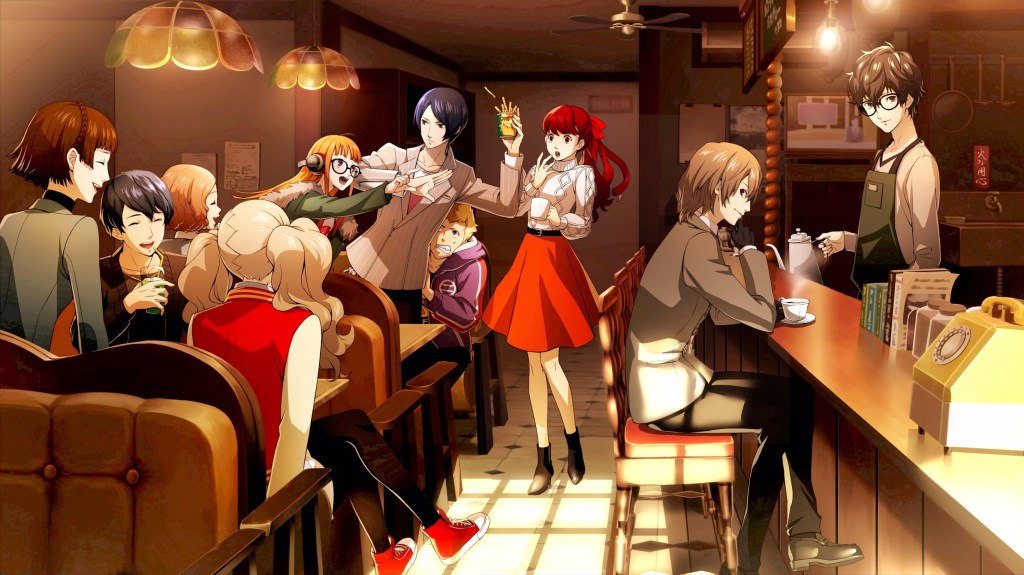
Adhering to a schedule and meeting deadlines is a reality that we wish to escape from when entering the realm of video games, so it’s kind of bizarre that the Persona series incorporates these tedious elements but somehow makes them exceptionally fun and engaging. Leading the double life of a high schooler and following the provided routine is surprisingly addictive, and emits this coincidental Spider-Man vibe of following your heart, doing the right thing despite being called a menace, and prevailing through your own emotional struggles and inner demons. The motivation and selfish nature of the corrupt villains may appear shallow upon first glance, but unravelling the layers of their malevolent complexities and tangible controversaries result in an uncomfortable, yet necessary experience that further strengthens the resolve of our Phantom Thieves and ultimately, the player. Persona 5’s narrative is sophistically outlined and masterfully delivered in a strategic manner that rewards the speculation of its intricate threads, yet it continues to subvert monumental expectations. I also grew to love the enigmatic Phantom Thieves just as much as Inaba’s Investigation team from Persona 4 Golden, both of which I now consider to be my favourite cast of characters in a video game. It’s a masterpiece that perfectly encapsulates an invigorating sense of equilibrium between quantity and quality. The stylistic menus and slick transitions are in a league of their own, the localized voice-acting is the best the series has seen thus far, and the bombastic score composed by Shoji Meguro is the delightful cherry on top. Persona 5 is an excellent sequel that most certainly lives up to the series’ high standards and, in a lot of ways, sets new gold standards for both the series and JRPG genre as a whole. It’s a symbolic experience that is layered with compelling themes and interactions, striking at the heart of many contemporary issues that plague society today. Persona 5 is undeniably an overwhelming experience, especially with its deliverance of complex systems and its ever expanding narrative, but persevere through its intimidating opening and you are left with an exceptional experience that will stay with you forevermore.
10
 After Story Gaming
I really need to get to this. I’ve had it for a while now, but haven’t played it yet. I’ve heard nothing but good things, but I have heard it’s a long one. And for obvious reasons it’s much easier to jump right into something like ARMS than a lengthy RPG, so I keep getting sidetracked from it. Hopefully I’ll be able to find the time even with all these big games still coming out in 2017. I’m definitely going to slow down on gaming in 2018 (more time to make my own game that way). But 2017 sure has been an excellent year for the medium.
LikeLiked by 1 person
Yeah one playthrough in Persona 5 will at least be 100 hours so it’s definitely a time consumer. But boy oh boy, is it fantastic. I can almost assure you that it’s probably unlike anything you’ve ever played before! 2017 has been nothing short of amazing and with Super Mario Odyssey releasing in the fall, it’ll only get better. Well I look forward to the end result of all your fruitful labor with your game! Perhaps I’ll review it if you let me play it 🙂
LikeLiked by 1 person
I’ll definitely get around to it before the end of the year. But if I want to get to 250 video game reviews by the end of 2017, I may need to wait a little longer before investing in it.
2017 should go down in the history books as one of gaming’s finest years. I think it’ll be on par with 1995 (a year that saw Chrono Trigger, EarthBound, Yoshi’s Island and DKC2). Super Mario Odyssey is so good!
I will definitely let you play whatever my first game ends up being. Feel free to review it when the day comes. 🙂 Expect it to be kind of weird…
LikeLiked by 1 person
Although I still haven’t played EarthBound – what the hell is wrong with me – 1995 was definitely a great year in gaming, and 2017 is probably the best year of the generation thus far.
I absolutely cannot wait to see how your crazy idiosyncratic ideas bleed into your final work 😊
LikeLiked by 1 person
Ive put this one on my list.
LikeLike
I was just about to start P5 in few minutes, so just came here to be reassured and ufff… starting now.
LikeLiked by 1 person
It’s one of the best, if not the best modern JRPGs. Persona 4 Golden is actually my favourite game of all time, but Persona 5 is objectively better. I’m about 75 hours into my Persona 5 Royal playthrough and am loving it
LikeLiked by 1 person
I think my already long list for games to play just got bigger (P4, Royal). I dont complain 🙂 Thanks for the info.
LikeLike